Earth's Hot Spots: 10 Geothermal Wonderlands That'll Blow Your Mind!
Advertisement
7. The Valley of Geysers, Russia
Advertisement
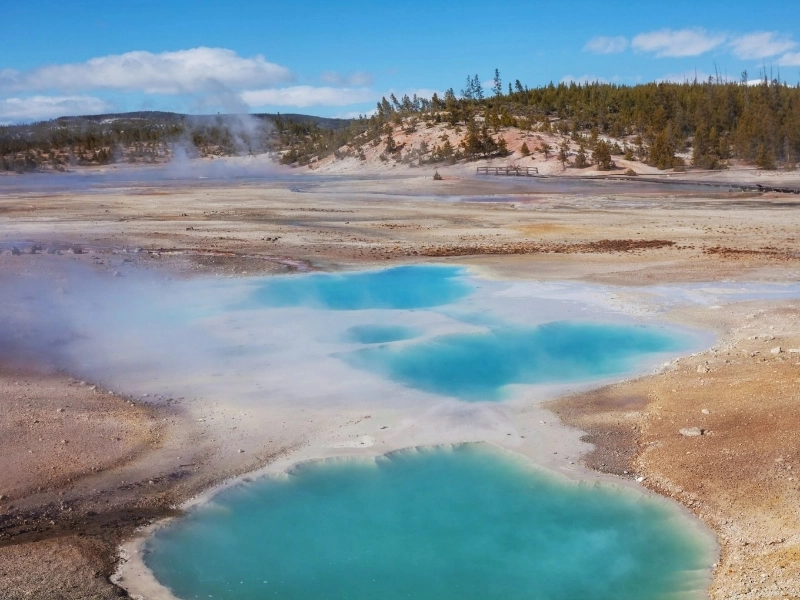
One of the most amazing and far-off geothermal beauties in the world, the Valley of Geysers are found on the Kamchatka Peninsula in the Russian Far East Found only in 1941 by Soviet scientist Tatyana Ustinova, this secret treasure boasts the second-highest geyser concentration on Earth following Yellowstone National Park. Tucked inside the Kronotsky Nature Reserve, a UNESCO World Heritage site, the Valley of Geysers, with their amazing range of geysers, hot springs, mud pots, and steam vents, extends roughly 6 kilometres (3.7 miles) along the Geysernaya River.The Valley's unusual geological environment results from its position within the Pacific Ring of Fire, a region of great volcanic and seismic activity. Over 300 volcanoes on the Kamchatka Peninsula, 29 of which are active, provide an environment ready for geothermal events. The Valley of Geysers itself is a stunning and enclosed terrain that accentuates the effect of the geothermal shows since the Geysernaya River has created a deep canyon with steep walls reaching up to 800 metres (2,600 feet) on either side.The Valley included more than 90 geysers during its height, each with individual character and eruption pattern. Among the most well-known geysers are the Troynoy (Triple), which erupts from three different vents; the Velikan (Giant), which may shoot water up to 40 metres (130 feet); and the Zhemchuzhny (Pearly), noted for its magnificent, pearl-like spray. The geysers produce a continually shifting scene of steam and hot water from little, frequent outbursts to huge, rare displays.The Valley's geothermal features are varied beyond only geysers. The terrain is dotted with hot springs of different diameters and colours, their fluids changed by different mineral concentrations and thermophilic bacteria. While fumaroles create an unearthly environment by unleashing jets of steam, mud pots bubble and gurgle, releasing earthy smells into the air. These elements taken against the rich Kamchatkan landscape produce an unmatched scene of natural beauty and geological intrigue.The secluded position and difficult access of the Valley of Geysers have both helped to maintain its unspoilt beauty and limited their view to the outside world. Petropavlovsk-Kamchatsky, the Valley, is just reachable by helicopter and lies more than 200 kilometres (124 miles) from the closest city. Although this solitude has helped shield the fragile ecology from the effects of mass tourism, it has also meant that rather few people have had the chance to personally see its beauties.Like its geological characteristics, the Valley's ecology is distinctive. Many of the local flora and fauna are peculiar to the area; the consistent heat and moisture from the geothermal activity produce microclimates that support this varied assortment. The area boasts several bird species, snow sheep, and Kamchatka brown bears. For decades biologists and ecologists have been enthralled by the dynamic ecology created by the interaction between the geothermal features and the surrounding fauna.Still, the Valley of Geysers deals constant difficulties from both natural and manmade causes. A large landslide drastically changed the terrain in 2007, burying many geysers and generating a natural dam that produced a lake in the valley. Although originally thought to be a disastrous event for the geothermal activity of the Valley, several geysers have since reactivated or found other outlets, proving the dynamic character of geothermal systems. This occurrence offers scientists a rare chance to investigate the adaptability and recovery of a geothermal area following a significant disturbance.Further seriously threatening the Valley of Geysers is climate change. The region's rising temperatures could change the delicate equilibrium of heat and water that propels geothermal activity. Variations in permafrost thaw and precipitation patterns could also affect the stability of the nearby slopes, therefore influencing possible geological changes including increased landslides.In the Valley of Geysers, conservation initiatives centre on preserving its unspoilt state while allowing for restricted tourism and scientific enquiry. Strictly limiting access to the Valley, the Kronotsky Nature Reserve guarantees that all trips are led and follow stringent environmental policies, so controlling the visitor count. These steps seek to strike a compromise between the preservation of this special environment and the scientific and educational worth it offers.Scientific study now finds great value in the Valley of Geysers as well. Its isolated habitat presents chances to investigate the adaptations of life to harsh conditions; its geothermal features give information on volcanic and hydrothermal processes. Valley research helps us better grasp geothermal energy potential, Kamchatka region geological past, and effects of climate change on vulnerable ecosystems.Ultimately, among Earth's most amazing and least disturbed geothermal marvels, the Valley of Geysers is one Its far-off position in Kamchatka's wilds has maintained a scene of great scientific value and natural beauty. From its varied geysers and hot springs to its own ecosystem, the Valley provides a window into the raw force of Earth's geological processes and the resiliency of life under challenging circumstances. Not only for their inherent worth but also for the lessons they can impart about our planet's dynamic systems and the delicate balance of nature, the preservation and study of sites like the Valley of Geysers becomes ever more important as we face worldwide environmental concerns.
Advertisement
You May Like