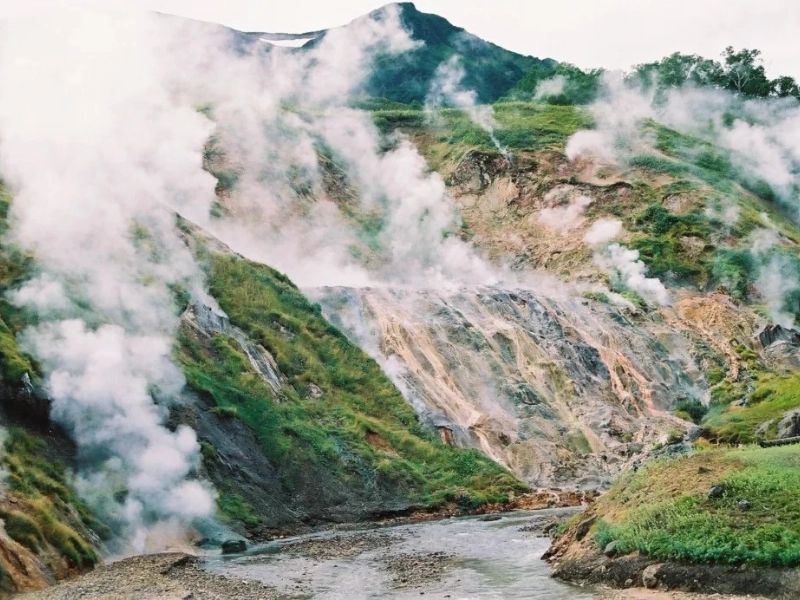
6. Norris Geyser Basin, USA
Advertisement
One of the most dynamic and varied geothermal sites in the world, Norris Geyser Basin is found in the north-west corner of Yellowstone National Park Named for Philetus W. Norris, the second superintendent of Yellowstone, this basin is well-known for its ever shifting terrain, acidic qualities, and high temperatures. Covering around 2.25 square miles (5.8 square kilometres), Norris Geyser Basin provides evidence of the raw force and unpredictability of Earth's geothermal activities.Porcelain Basin and Back Basin are the two primary divisions of the basin; each presents special geothermal characteristics and experiences. The bleak, moonlike terrain of porcelain basin is peppered with several steam vents and little geysers. The area's porcelain-like look comes from the stark white mineral deposits covering most of the ground, which produce an unearthly and surreal environment. Back Basin, on the other hand, boasts some of the most amazing geysers in the park, including Steamboat Geyser, the tallest active geyser worldwide, and is more largely forested.Scientists as well as tourists find great delight in Steamboat Geyser, the crown gem of Norris Geyser Basin. Steamboat can exceed even the well-known Old Faithful geyser by shooting water over 300 feet (90 metres) into the air during full eruption. But Steamboat's volatility is what really makes it unique. Unlike Old Faithful, which erupts on a very consistent timetable, Steamboat's main eruptions are irregular and span days to decades. For park guests, who might be fortunate enough to see one of these rare, amazing moments, this unpredictability adds a bit of excitement and expectation.The severe conditions of Norris Geyser Basin make the area distinctive within Yellowstone. With subterranean temperatures ranging from 459°F (237°C), this is the hottest and most variable of the park's thermal sections. The waters of the basin are likewise quite acidic; in certain areas their pH ranges from 2 or 3. Because only the toughest microbes can live under these harsh temperatures, Norris is a great place to research extremophiles—organisms that would be fatal to most living forms.Among the most fascinating features of Norris Geyser Basin is its dynamic character. Periodically, the basin experiences "disturbances," during which thermal characteristics could vary greatly in appearance, temperature, or activity level. New features could show up out of nowhere, while others might fall dormant or vanish totally. These variations can take place over several days or even hours, hence every visit to Norris could be rather different. The complicated interaction of subterranean water networks, seismic activity, and changes in the underlying magma chamber explains this dynamism.As varied as the features of Norris Geyser Basin are the colours shown here. Although the clear white of silica deposits defines many places, others reveal a vivid palette ranging from deep blues and greens to brilliant yellows and oranges. Mostly thermophilic (heat-loving) bacteria and algae thriving in the hot, mineral-rich waters produce these colours. The temperature of the water and the kinds of life present determine the particular colours; this creates a live canvas that moves and changes with the thermal activity of the basin.Several unusual geothermal phenomena seen in the Norris Geyser Basin further distinguish it from other Yellowstone regions. Among the biggest acid-water geysers worldwide, for instance, is the Echinus Geyser. Its name, derived from the Greek term for "sea urchin," speaks to the spiky sinter structures encircling its vent. One other noteworthy feature is Cistern Spring, a deep, blue pool connected beneath Steamboat Geyser. Usually draining only to replenish gradually over the next days or weeks, Cistern Spring typically disappears when Steamboat erupts.The geology of the basin goes beyond its outward characteristics. Since Norris stands at the junction of three main fault lines, it is an important site for research on the link between geothermal processes and seismic activity. The basin's location also puts it at the edge of the Yellowstone Caldera, the enormous volcanic crater underlying most of the park. This orientation enables a more direct link to the magma chamber below, hence contributing to the intense temperatures and dynamic character of the basin.For academics, Norris Geyser Basin is a priceless natural lab. Geology, microbiology, and geochemistry among other disciplines, researchers investigate the basin to provide understanding of anything from the evolution of life in hostile conditions to the possibility for geothermal energy generation. The special circumstances of the basin also make it a possible analogue for conditions seen on other planets, therefore supporting our knowledge of astrobiology and the hunt for extraterrestrial life.Given Norfolk Geyser Basin's prominence and delicate nature, conservation initiatives there are both vital and difficult. Designed trails and boardwalks assist preserve the delicate thermal qualities and stop guests from unintentionally entering dangerous hot springs. Education initiatives seek to enlighten guests on the need of maintaining this special habitat and the possible risks associated with leaving approved areas.Finally, Norris Geyser Basin offers evidence of the active and strong forces operating under the surface of Earth. One of the most interesting and scientifically useful geothermal sites on Earth, its severe temperatures, acidic fluids, and constantly shifting terrain From the towering Steamboat Geyser eruptions to the miniscule extremophiles surviving in its harsh waters, Norris provides a window into the sheer power of nature and the resiliency of life. Remind us of the dynamic and multifarious character of Earth's geology as a fundamental aspect of Yellowstone National Park, which still inspires wonder, stimulates scientific exploration, and questions our knowledge of geothermal processes.
Advertisement