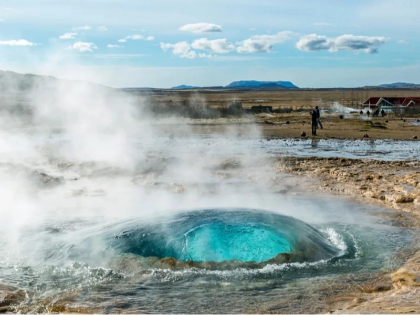
Captivating expressions of Earth's core heat, geothermal sites provide amazing shows of natural force. From Yellowstone's famous geysers to Iceland's bubbling mud pots, these amazing places highlight the changing geological events of the world. Visitors are exposed to an amazing collection of hot springs, steaming vents, and vivid mineral deposits producing surreal settings that appear taken from science fiction. Every geothermal area has special qualities that reflect the several ways in which ground heat interacts with topography. These natural beauties give insights into the fundamental dynamics of the Earth as well as amazing visual experiences. We will see personally the raw beauty and strength of our planet's geological artistry as we investigate the most vivid geothermal sites, therefore enabling us to wonder at the great forces sculpting our planet.
1. Yellowstone National Park, USA
Advertisement
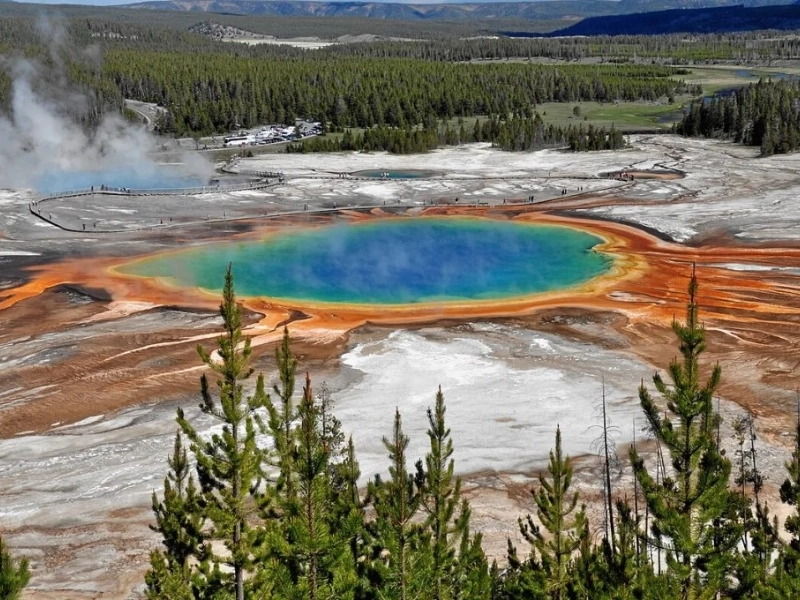
Mostly in Wyoming but with sections extending into Montana and Idaho, Yellowstone National Park is evidence of the unadulterated might and beauty of Earth's geothermal activity. Originally opened as the first national park in the world in 1872, Yellowstone is among the biggest and most varied protected areas in the United States covering around 3,500 square miles. The park's geothermal characteristics arise from its position above a large supervolcano, which over millions of years has sculpted the terrain via continuous geothermal activity and volcanic eruptions.Yellowstone's appeal stems mostly from its unmatched geothermal feature concentration—more than 10,000 total across the park. From the globally renowned geysers to vibrant hot springs, bubbling mud pots, and steaming fumaroles, these elements span the spectrum. Old Faithful, a geyser whose consistent outbursts send shooting water up to 180 feet into the air almost every 90 minutes, is most famous among these and has enthralled guests for years. Old Faithful is not only a natural beauty but also a symbol of the park's continuing appeal and the consistency of natural forces because of its dependability.Beyond Old Faithful, the park features many other amazing geothermal sites. With its bright rainbow-like colours, the Grand Prismatic Spring—the biggest hot spring in the United States and the third-largest worldwide—is a wonder of nature. Heat-loving bacteria that flourish in the mineral-rich waters of the spring produce the arresting blues, greens, and oranges. Measuring around 370 feet in diameter and over 121 feet deep, the spring's great scale creates an amazing display that attracts guests from all around the world.Another gem of Yellowstone's geothermal scene, the hottest and most active geyser basin in the park is the Norris Geyser Basin. It boasts an always shifting collection of geysers, including Steamboat Geyser, the highest active geyser in the world that may blast water over three hundred feet into the sky. With boiling vents, crystalline ponds, and barren settings that appear more appropriate to another planet than Earth, the basin's acidic characteristics and severe temperatures produce a surreal environment.Beyond these well-known sites, Yellowstone's geothermal wonders comprise a wide range of less well-known but as intriguing events. For example, the mud pots in the park present an other form of show. Depending on the mineral concentration, these acidic hot springs with restricted water supply produce thick, boiling mud in a range from chocolate-brown to slate-gray. These elements' earthy scent and continuous bubbling and gurgling create a multi-sensory experience that fascinate guests.Apart from producing amazing visual displays, the geothermal activity of the park supports distinct ecosystems. Thermophilic, or heat-loving, microorganisms—some of which are nowhere else on Earth—have evolved in response to the severe circumstances in and around certain features. Many of the striking colours seen in the hot springs of the park are the result of these microorganisms, which have attracted much scientific attention with possible uses in medicine to energy generation.Yellowstone's geothermal features are dynamic, always changing; they are not fixed. The geology of the park is always shifting; new features show up while others either become inactive or change over time. This dynamism gives the visitor experience an exciting and unpredictable quality since every visit to the park may expose fresh beauties or modifications to known elements.Advancement of our knowledge of Earth's geological processes and the possibility of geothermal energy depends much on the preservation and research of Yellowstone's geothermal wonders. The park provides insights on vulcanology, hydrothermal systems, and extremophile biology, so acting as a natural laboratory for researchers from several fields. Furthermore, the management issues the park has in juggling visitor access with conservation have given insightful lessons in environmental stewardship and sustainable travel.Finally, the geothermal features of Yellowstone National Park show a special meeting of natural beauty, scientific value, and cultural relevance. From the dependable eruptions of Old Faithful to the kaleidoscope colours of the Grand Prismatic Spring, these beauties still inspire astonishment, encourage scientific enquiry, and remind us of the strong forces at work under the surface of Earth. Yellowstone is still unmatched for those wishing to view the geothermal wonders of the planet in their most breathtaking form as evidence of nature's inventiveness and might.
Advertisement